


Varicose veins on the legs in women are swelling of the peripheral venous vessels under the skin, at the same time they change their appearance, become swollen and crooked.The disease is characterized by the formation of nodes and the destruction of venous valves.Due to stagnation of blood in the veins, the pressure rises sharply, the walls become thinner.
Do not self-medicate!Before applying the recommendations, you should consult a doctor to make a diagnosis and prescribe a treatment method!
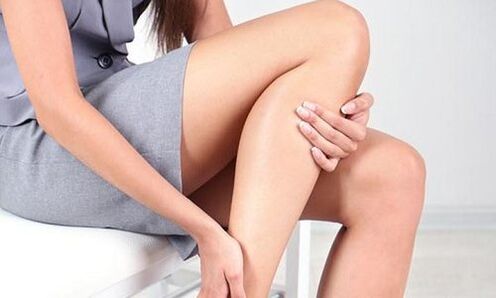
Varicose veins on the legs in women are swelling of the peripheral venous vessels under the skin, at the same time they change their appearance, become swollen and crooked.
Reasons
The triggering factor for the development of varicose veins in women is an imbalance between collagen and elastin.In this case, the venous walls lose their elasticity, causing them to stretch.The valves of the veins cannot cope with the increased load, so the blood flows in the opposite direction.
Causes of the development of varicose veins in women:
- unfavorable heredity.If one of the parents also has varicose veins, the risk of development increases significantly.Moreover, the pathology is not inherited: it occurs with a genetically determined weakness of the venous valves;
- changes in hormonal balance in women.The disease can occur during adulthood, during pregnancy and childbirth, during the natural decline of sexual function;
- use of hormonal drugs (most often uncontrolled).Medical studies have proven that estrogen contained in hormonal preparations reduces the amount of collagen produced, which disrupts venous tone;
- inflammatory diseases in the pelvic organs and female genital organs.They cause damage to small vessels.They begin to bleed excessively.The valves do not cope with their work, which causes the blood to flow backwards;
- excessive physical activity at work and at home.Due to the vertical position of the body, there is an ever-increasing pressure in the venous vessels.With static load, intravenous pressure increases;
- sedentary lifestyle.Women and representatives of office professions who work at computers for a long time are at risk;
- weakening of immune defense and consequent infectious pathologies;
- injuries;
- constipation, cough, sneezing;
- straight legs;
- wearing tight clothes and high heels.

Symptoms of varicose veins in women
Initial symptoms of varicose veins:
- the appearance of a blue-red "vascular network" on the legs;
- a feeling of pain and heaviness in the legs, especially in the afternoon and evening (patients feel as if their lower limbs are "burning");
- numbness of the legs;
- the appearance of spasms of the lower extremities.
With the development of the disease, women experience the following symptoms:
- thickening, darkening and peeling of the skin of the lower leg;
- the appearance of spots on the legs;
- the appearance of muscle pain;
- the appearance of painful sensations when palpating the veins;
- reduce the intensity of anxiety while lying down;
- the formation of edema in the ankles and lower legs.
When superficial veins are damaged, women experience the following symptoms:
- redness of the skin area located above the varicose vein;
- severe pain in the affected area of the vein;
- rise in temperature to subfebrile level;
- hardness of soft tissues during palpation.
When the superficial vessels are damaged, the body temperature of women rises.
Diagnostics
Diagnostics includes the following methods and techniques:
- Preliminary examination of the woman.This begins with an assessment of the patient's general health, taking their pulse and examining blood circulation patterns.The doctor pays attention to the possible presence of trophic changes in the skin, muscles, hair and nails.Visual examination and palpation of the lower extremities is performed.
- Collect information about the disease.The doctor analyzes detailed information about the presence of hereditary factors, previous injuries, the use of hormonal drugs, the number of pregnancies and their progress.
- Blood test.Women should undergo not only a general, but also a biochemical test.The doctor will also prescribe a blood test for hormones.A blood test for glycoside hemoglobin is necessary to rule out diabetes.
- Detailed urinalysis.
- Three-wire test.It consists of compressing a slightly raised leg with a tourniquet near the groin, in the knee joint and in the middle of the thigh.
- Pratt's test allows determining the degree of damage to the vessels connecting the superficial and deep veins.For this, the inguinal vein is compressed and the leg is wrapped with an elastic bandage (the woman is stretched).Then he should stand up, after which the bandage is gradually opened.
- Doppler or duplex scanning of veins.During this examination, the condition of the venous valve and the vessel wall is determined.It is important to see the deep veins with Doppler ultrasound.
- Valsalva maneuver.This is done with the woman in a horizontal position.The patient must inhale air through a tube connected to a manometer for 15 minutes until a pressure of 40 mm Hg is achieved.Art.The doctor assesses changes in blood pressure and heart rate.
- Phlebography (x-ray of venous vessels).It can be used to assess the extent of damage to superficial veins in women.This diagnostic method is characterized by the reliability and accuracy of the obtained results.
To make a diagnosis, a woman must undergo a blood test.
Stages
The main and most common classification of varicose veins distinguishes 3 stages of the disease (the initial stage is not included - zero, when women are only concerned about the appearance of heaviness, swelling and heaviness).
First
This stage is characterized by the appearance of night swelling and leg cramps.Patients often complain of a feeling of fullness in the extremities.Some visual disturbances are also seen:
- change in skin tone (blueness);
- the presence of vascular networks on it;
- the appearance of crooked veins in the legs.
In hot weather, all symptoms of the disease intensify, spasms become stronger.If the weather cools down, then the manifestations of the pathology, on the contrary, decrease a little.Sometimes women believe that self-healing occurs, but this is not the case.
Second
The 2nd stage of varicose veins in women is characterized by the following manifestations:
- constant feeling of heaviness in the legs;
- feeling of "full" veins;
- the appearance of edema at any time of the day, not only in the evening;
- the pain sensitivity of the skin at the site of venous lesions decreases.
In women, the number of varicose veins increases at this stage of the disease.There are more varicose veins and they cause serious discomfort.
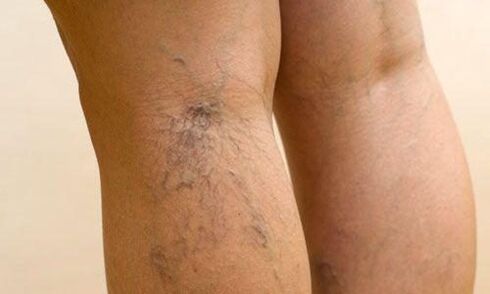
In women, the number of varicose veins increases in the second stage of the disease.
the third
This stage of the disease is characterized by the appearance of the following symptoms in women:
- pain during movement, long walks and heavy lifting.Sometimes walking and other types of physical activity are almost impossible without the use of an elastic bandage;
- the appearance of a slight swelling in the ankle area due to the accumulation of stagnant blood;
- the formation of such a hematoma as a result of a small blow;
- the appearance of a rash on the skin.Some women experience itching and redness;
- increased blood pressure;
- head and neck pain (they are associated with cerebrovascular accidents);
- violation of the integrity of the skin.At this stage, patients experience the development of trophic ulcers.
In the advanced stage of varicose veins, women may experience disturbances in the normal functioning of the reproductive system and vegetative-vascular pathologies.The risk of developing pulmonary embolism is high.
Treatment of varicose veins
It is easier to treat a disease that is diagnosed in the early stages than when the patient goes to a doctor with obvious changes in the venous vessels.
A phlebologist treats this disease.
There are different ways to treat pathology in women.If they are used thoroughly, they will have an effect.
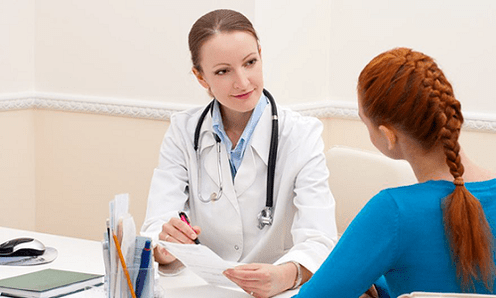
It is easier to treat a disease that is diagnosed in the early stages than when the patient goes to a doctor with obvious changes in the venous vessels.
Medicine
Varicose veins in the legs can be effectively treated with the following drugs:
- ointments that help relieve pain and increase vascular tone;
- ointments and gels with heparin.It is especially effective if spider veins appear on the legs;
- systemic tablets.They prevent the development of varicose veins in women and help to eliminate the manifestations of varicose veins.They improve the condition of blood vessels, blood flow and remove congestion.
If you have varicose veins, you should wear compression garments.The term of use is determined individually.
Operation
In advanced cases, surgical intervention is indicated for women.The following types of operations are used:
- Miniphlebectomy (removal of changed veins).Using a special hook, the altered vein is removed through a micro-cut or puncture, then crossed and removed.
- Sclerotherapy is the injection of drugs into a vein using thin needles.A sclerosing drug causes a clot to form that blocks blood flow.As a result, the venous walls stick together and the vein is excluded from the general blood flow.
- Endovenous surgery (EVLT).In this case, a laser is used.
- Radiofrequency ablation.Using a needle, a special radio wave device is inserted into the lumen of the vein through a small puncture and emits radio frequency waves that help reduce the lumen of the vein and replace it with connective tissue.
- Minimally invasive surgery using steam.Steam is injected into the vein through a thin catheter, under its influence the diseased vein narrows, sticks together and disappears.
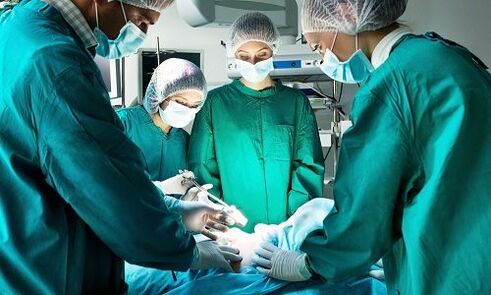
In advanced cases of varicose veins, surgical intervention is indicated for women.This can be miniphlebectomy, sclerotherapy or radiofrequency ablation.
the people
At home, compresses are used to normalize venous circulation.Women should do all such procedures daily, applying the medicine at night.Use for compresses:
- cabbage leaves should be washed and boiled with boiling water, greased with vegetable oil;
- mashed potatoes.1 should be rubbed into a thin frying pan;
- Alcohol tincture of Kalanchoe.Chop fresh Kalanchoe leaves into a pulp, pour 40% alcohol (100 ml), leave to brew in a dark place for 1 week, then filter;
- laundry soap.For the procedure, you need to take 30 g of the product and mix it with 1 tsp.water
Prevention
Women should heed the following medical advice:
- alternative work and rest modes to reduce the intensity of orthostatic loads;
- choose different body positions if necessary to stay in a sitting position for a long time;
- do not sit cross-legged;
- women are prohibited from wearing clothes that constrict the legs, especially the groin area;
- do not wear socks with tight or tight elastic bands;
- give up high-heeled shoes;
- avoid constipation.

Women should listen to such medical advice.For example, phlebologists advise beautiful ladies not to sit cross-legged to protect themselves from varicose veins.
The following are useful for women to prevent varicose veins:
- riding a bicycle;
- swimming;
- morning exercises;
- correction of body weight;
- abstinence from alcohol and smoking;
- contrast shower;
- drink 1.5-2 liters of water per day.
Possible complications
Complications of varicose veins in women are as follows:
- phlebitis (inflammation of venous walls);
- thrombophlebitis (blood clots in inflamed vessels);
- thrombosis (blood clot enters deep veins);
- thromboembolism of the pulmonary artery (a life-threatening blockage occurs);
- trophic ulcers (damage to the skin of the lower extremities);
- dermatitis is an inflammatory disease characterized by itching and redness of the skin.
Varicose veins during pregnancy
During pregnancy, women can often experience changes in their veins.At this time, the amount of blood circulating through these vessels increases.This disease is caused by an increase in the amount of progesterone.Ointments, gels and tonics are used for treatment.

During pregnancy, women can often experience changes in their veins.To treat the disease, expectant mothers can use ointments, gels and tonics.